Laguna Beach home insurance got a lot harder to shop for in 2026. 87% of this city sits in a Very High Fire Hazard Severity Zone — here’s what that actually means for your bill, and what to check before you write an offer.
Updated July 2026 · 7-Minute Read · For Buyers & Movers
The Numbers That Matter
87% of Laguna Beach
sits inside a Very High Fire Hazard Severity Zone, including areas that don’t look “high risk” from the street.
~41% Statewide
of homes in the highest-risk ZIP codes are now on the California FAIR Plan as of early 2026.
29.1% Increase
approved for the FAIR Plan, effective October 2026, on top of a new wildfire assessment surcharge.
75 Days’ Notice
is the minimum California requires before an insurer can non-renew a policy in a Very High Fire Hazard zone.
Why Standard Insurance Is Getting Harder to Find
Every relocation guide, including a few of my own, walks you through neighborhoods, schools, and what a house actually costs here. Almost none of them walk you through what Laguna Beach home insurance actually costs — and in 2026, that number has become one of the biggest surprises for people moving here.
Over the past two years, California’s home insurance market has gone through real upheaval. Major carriers — State Farm, Allstate, and Farmers among them — have paused new business or non-renewed existing policies across high fire-risk ZIP codes statewide, including pockets of Orange County. The trigger was a combination of updated CAL FIRE hazard severity maps, expanded in 2022–2023, and carrier loss models that no longer pencil out in these zones.
What the California FAIR Plan Actually Covers
When standard carriers step back, more Laguna Beach homeowners land on the California FAIR Plan, the state’s insurer of last resort. It’s the piece of Laguna Beach home insurance that catches most buyers off guard, so two things are worth knowing before you assume it’s a simple backup option.
| What It Covers | What It Doesn’t |
|---|---|
| Fire & smoke damage | Liability, theft, water damage |
| Structure on the primary policy | Personal property, most plans |
| Parcels standard carriers decline | Bundled discounts |
Figures are directional 2026 estimates from public market data — get a quote on the specific address before you rely on a number.
Most homeowners on the FAIR Plan pair it with a Difference-in-Conditions (DIC) policy from a separate carrier to fill those gaps — meaning two premiums, two renewal dates, and two companies to coordinate if something goes wrong. Premiums in the most exposed zones run anywhere from a few thousand dollars a year to $25,000 or more.
What Changed in 2026
Laguna Beach home insurance got noticeably more expensive this year, and it wasn’t a one-time bump. The California Department of Insurance approved a 29.1% average FAIR Plan rate increase effective October 2026, layered on top of a new assessment surcharge tied to the January 2025 wildfire losses. Some standard carriers, including Travelers, have added their own 1% surcharge statewide to cover the same shortfall.
California law does require insurers to give homeowners in Very High Fire Hazard zones at least 75 days’ written notice before non-renewing a policy — a real protection, but also a sign of how common non-renewal has become in this category to begin with.
What to Actually Do Before You Move Here
None of this means don’t move to Laguna Beach. It means Laguna Beach home insurance needs to be its own line item on your due-diligence list, earlier than most people think to add it.
- Get a real quote before you’re in contract. Ask your lender or agent for the specific listing address and get an actual quote, not a rough estimate.
- Ask if the seller is already on the FAIR Plan. That’s a signal about how that exact parcel is rated — information no listing photo will give you.
- Understand the 75-day non-renewal rule so you know what protection you have if a policy is cancelled after you close.
- Ask about defensible space requirements early. Some insurers now require proof of compliance with the city’s vegetation management rules before binding or renewing a policy.
Fire Risk Isn’t Uniform Across Town
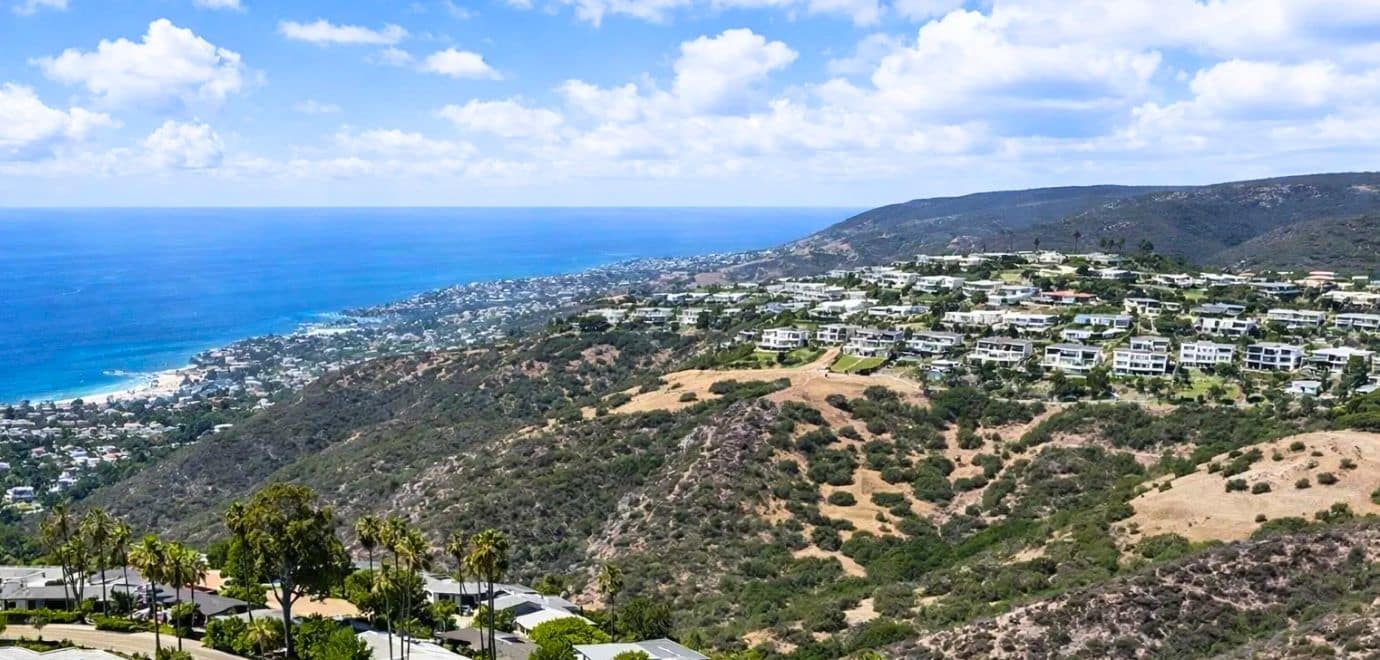
This is the part that surprises people most: fire exposure varies block by block, not just neighborhood by neighborhood. A home tucked into upper Laguna Canyon carries different exposure than a bluff-top property in North Laguna, even though both technically sit inside the hazard zone boundary.
Compare Neighborhoods
Match your budget, lifestyle, and risk tolerance to the right part of town.
Neighborhood Match Guide →Cost of Living
Add insurance to the full monthly picture before you commit to a price range.
Cost of Living Guide →Neighborhoods Overview
Still deciding if Laguna Beach is the right move at all? Start here.
See All Neighborhoods →Laguna Beach Home Insurance: Fast Answers
Is Laguna Beach home insurance hard to get?
It’s gotten harder. Several major carriers have paused new business or non-renewed policies across high fire-risk ZIP codes in California, including parts of Laguna Beach, pushing more homeowners onto the state FAIR Plan.
What does the California FAIR Plan cover?
Fire and smoke damage only. It doesn’t include liability, theft, or water damage, so most homeowners pair it with a separate Difference-in-Conditions policy for those gaps.
How much does fire insurance cost in Laguna Beach?
It depends heavily on the specific parcel. FAIR Plan premiums in high-risk zones statewide range from a few thousand dollars a year to $25,000 or more. Get a quote on the exact address before you assume a number.
Can my insurer drop me right after I move in?
Not without notice. California law requires at least 75 days’ written notice before a non-renewal in a Very High Fire Hazard zone, giving you time to shop for replacement coverage.